The format: فقط ... لا غير
On UAE cheques, the amount in Arabic words is usually framed by two phrases: فقط ("only") before the amount and لا غير ("nothing more") after it. Together they close the line, so no one can add words before or after the amount. For example:
فقط ألف وخمسمائة درهم لا غير
That reads "only one thousand five hundred dirhams, nothing more", for AED 1,500.
The order of the words
- Largest part first. Write thousands, then hundreds, then the rest, as in English.
- Units before tens. 45 is خمسة وأربعون, literally "five and forty". This is the step people most often get wrong.
- Join every part with و ("and"). Each part after the first starts with و, attached to the next word with no space.
- Hundreds are one word. ثلاثمائة (300) and خمسمائة (500) are written joined.
- Dirhams, then fils. Add the fils at the end with و, before لا غير.
Why the word for "dirham" changes
In Arabic, the noun after a number changes form depending on the number. That's why the same currency appears three ways:
- After 3 to 10, the noun is plural: ثلاثة آلاف (three thousand).
- After 11 to 99, it's singular with an "-an" ending: خمسة وأربعون درهماً (45 dirhams).
- After hundreds and thousands, it's plain singular: مائة درهم (100 dirhams), ألف درهم (1,000 dirhams).
Numbers 3 to 9 also take the opposite gender to the noun. درهم is masculine, so the numbers take the form ending in ة: ثلاثة, خمسة.
Worked examples
| Amount (AED) | Amount in Arabic words |
|---|---|
| 1,500 | ألف وخمسمائة درهم |
| 3,000 | ثلاثة آلاف درهم |
| 25,000 | خمسة وعشرون ألف درهم |
| 12,345.50 | اثنا عشر ألفاً وثلاثمائة وخمسة وأربعون درهماً وخمسون فلساً |
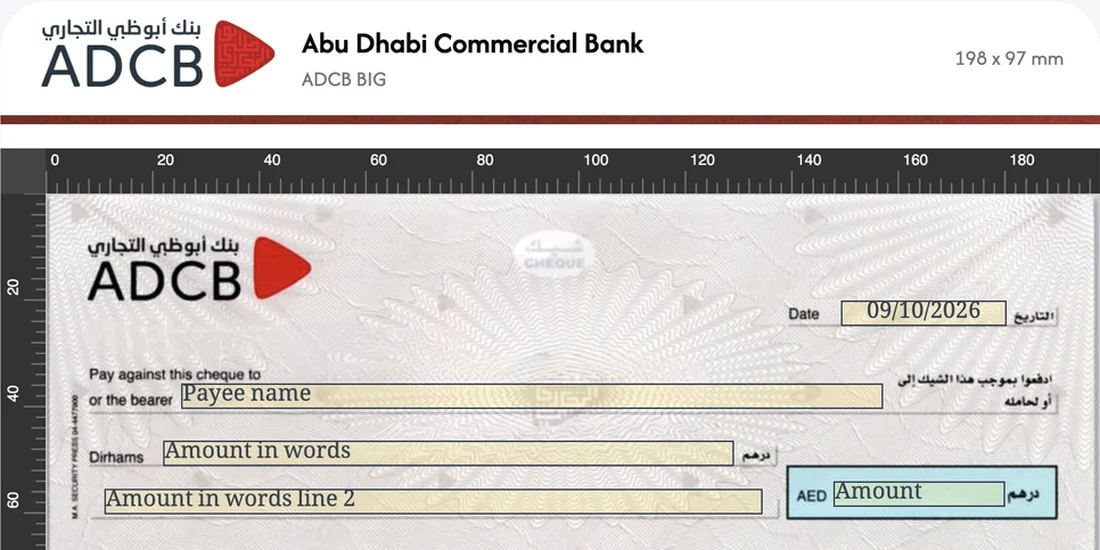
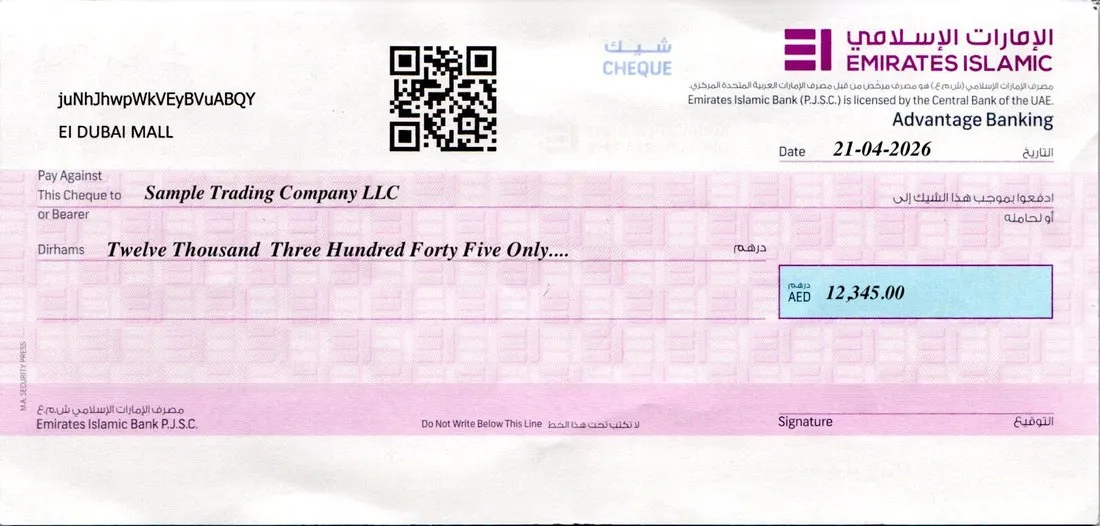
On the cheque, each goes between فقط and لا غير.
Common mistakes
- Tens before units. Writing "forty five" in English order instead of خمسة وأربعون.
- Words that don't match the figures. If they differ, the bank may return the cheque. Check every digit.
- Leaving space on the line. Always close with لا غير, so nothing can be added after the amount.
- Corrections. Don't overwrite a mistake. Cancel the leaf and write a new cheque.
Let software write it for you
Arabic number grammar has more rules than fit on one page, and a single slip means a cancelled cheque. ChequeEazy writes the amount in words in Arabic or English from the figure you type, and prints it in the right place on your bank's leaf. The Cloud + Arabic plan adds a full Arabic interface and right-to-left layouts.